Hinged Containers: Understanding Material Types and Uses




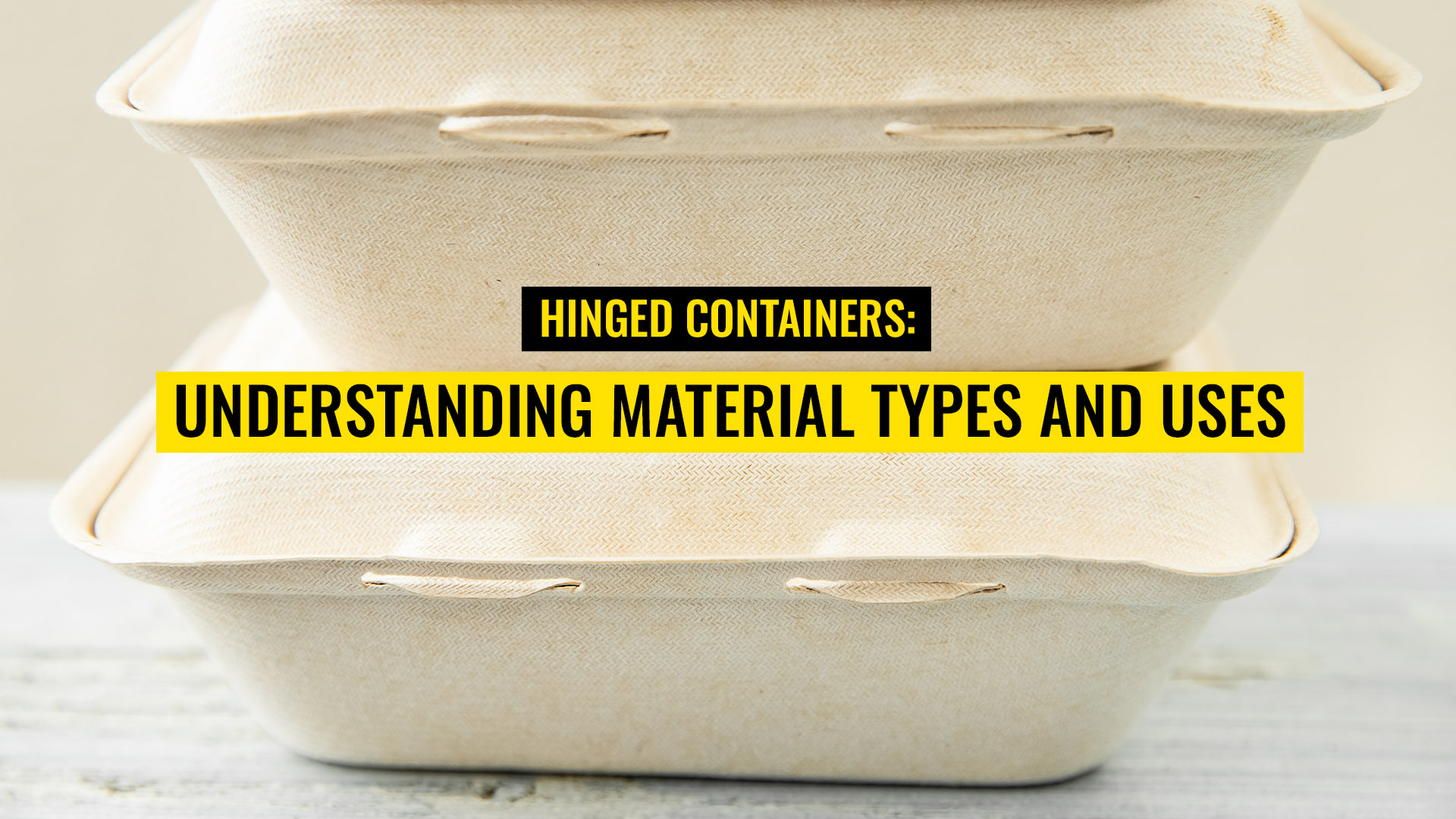
Hinged containers are widely used across supermarkets, restaurants, grab-and-go stations, bakeries, delis, co-packer, processors, and for storing dry goods. Their versatility comes from the wide range of sizes, shapes, and substrates available, each designed to support different food types, temperatures, and service environments. With so many substrates to choose from, it can be challenging to determine which container is best suited for you and your business. In this blog post, we break down the most common hinged take-out container substrates and what areas they perform best.
Heat-Performance and Hot Food Substrates
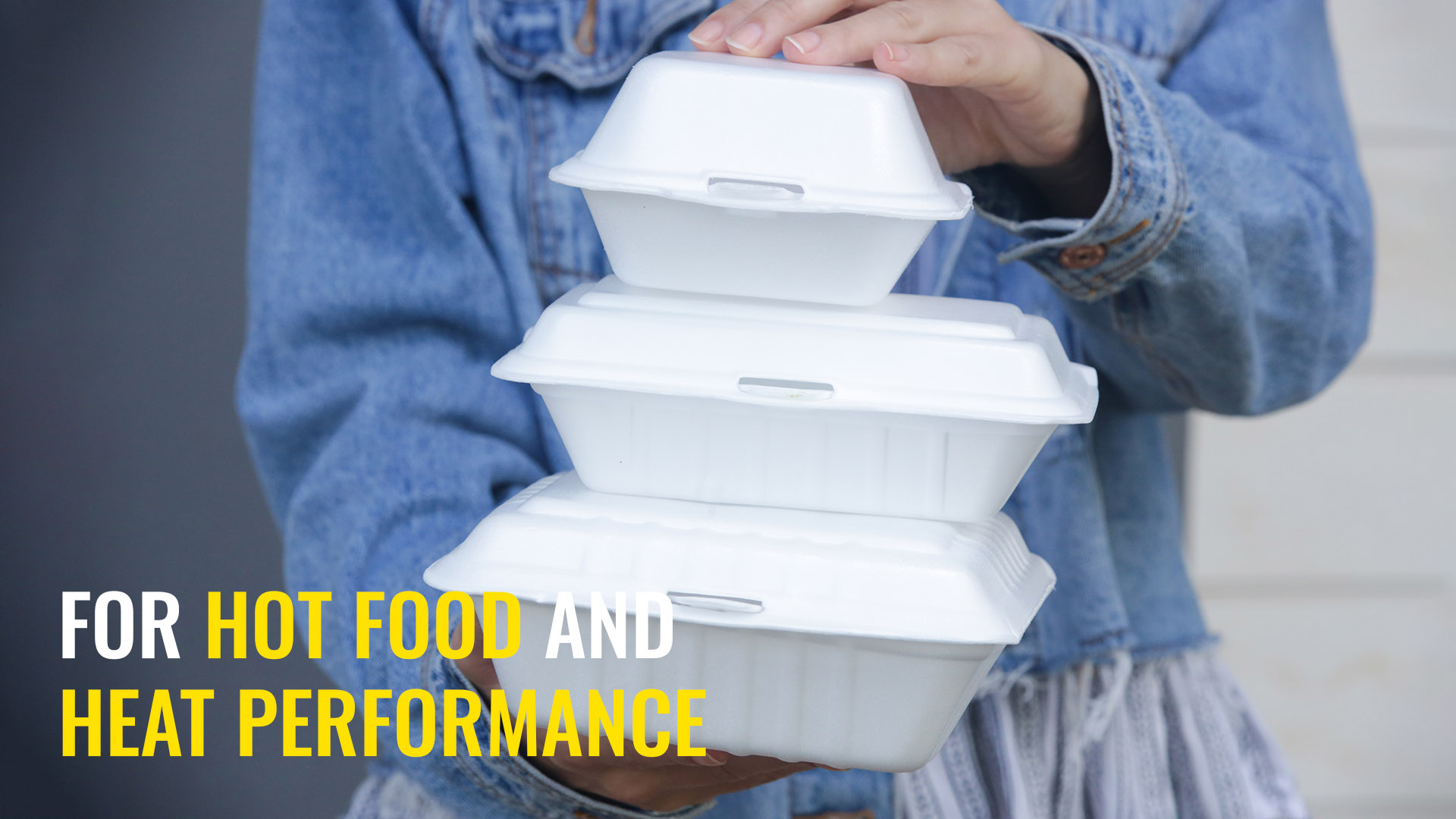
Not all take-out containers are created equal, especially when it comes to heat. If your customers want to reheat their meals, choosing a container that can safely handle high temperatures is essential. To help you make the right choice, here are a few of the most common substrates for hot foods.
Polystyrene Hinged Containers (PS)
Polystyrene hinged containers are ideal for restaurants serving hot and cold foods such as sandwiches, burgers, pastas, and french fries due to their excellent heat resistance. This keeps foods warm without warping under typical serving temperatures. However, they are not recommended for freezer storage or microwave use, as high heat from microwaving can cause the material to soften and deform. Their clear material provides excellent product visibility, making them a great option for merchandising and refrigerated grab-and-go offerings.
An example of a PS containers would be Dart’s black and clear hinged container.
Polypropylene Hinged Containers (PP)
Polypropylene is a versatile plastic from the polyolefin family, known for its durability, crack-resistance, and microwave-safe potential. Identified by the resin code “5,” typically found on or near the bottom of products, polypropylene begins as a liquid monomer that is polymerized into a stable, solid polymer. From there, it can be shaped into finished products through several manufacturing methods, extrusion, thermoforming, or injection. 1) Extrusion forces melted plastic through a mold, cooling it into the desired form. 2) Thermoforming starts with an extruded sheet of plastic that is heated and shaped over a mold using heat and suction, then cooled and trimmed. 3) Injection molding is similar to extrusion, but instead of passing through a mold, the melted plastic is injected into a mold cavity, cooled, ejected, and trimmed to create the final product.
Common scenarios you will want to use a PP container are for dual temperature uses (from freezer to microwave) and serving hot and cold foods. PP is also microwavable, cut resistant, and can be top-rack dishwasher safe when reused at home. An example of a PP container would be Sabert’s or Fineline’s hinged containers.
When cleaned and free of food contamination, PP packaging can typically be curbside recycled. However, for the most accurate information, we recommend checking with your local municipality or waste hauler to see if it is accepted in your community’s recycling program.
Mineral-Filled Hinge Polypropylene (MFPP)
Mineral-filled polypropylene combines traditional polypropylene with up to 40–50% natural mineral content. This reduces the overall amount of plastic needed for each container, making it a more sustainable option, especially in regions where recycling options may be limited. MFPP is highly versatile, performing well with both hot and cold foods. It is cut-and moisture-resistant, durable enough for grab-and-go service, and microwavable for added convenience.
Food service establishments often choose MFPP hinged containers for items like hearty salads, pasta dishes, or warm sandwiches that need a container that can hold up under moisture and heat. They are also a solid choice for deli-style offerings, ready-to-eat meals, and other menu items that customers may want to reheat at home. An example of a MFPP container would be Supplyways hinged container.
While polypropylene itself is recyclable, the mineral content can make MFPP not acceptable through curbside recycling. These containers are more likely to be recycled through commercial waste and recycling systems, depending on local capabilities. For the most accurate information, check with your local municipality or waste hauler.
Cold and Retail Oriented Substrates
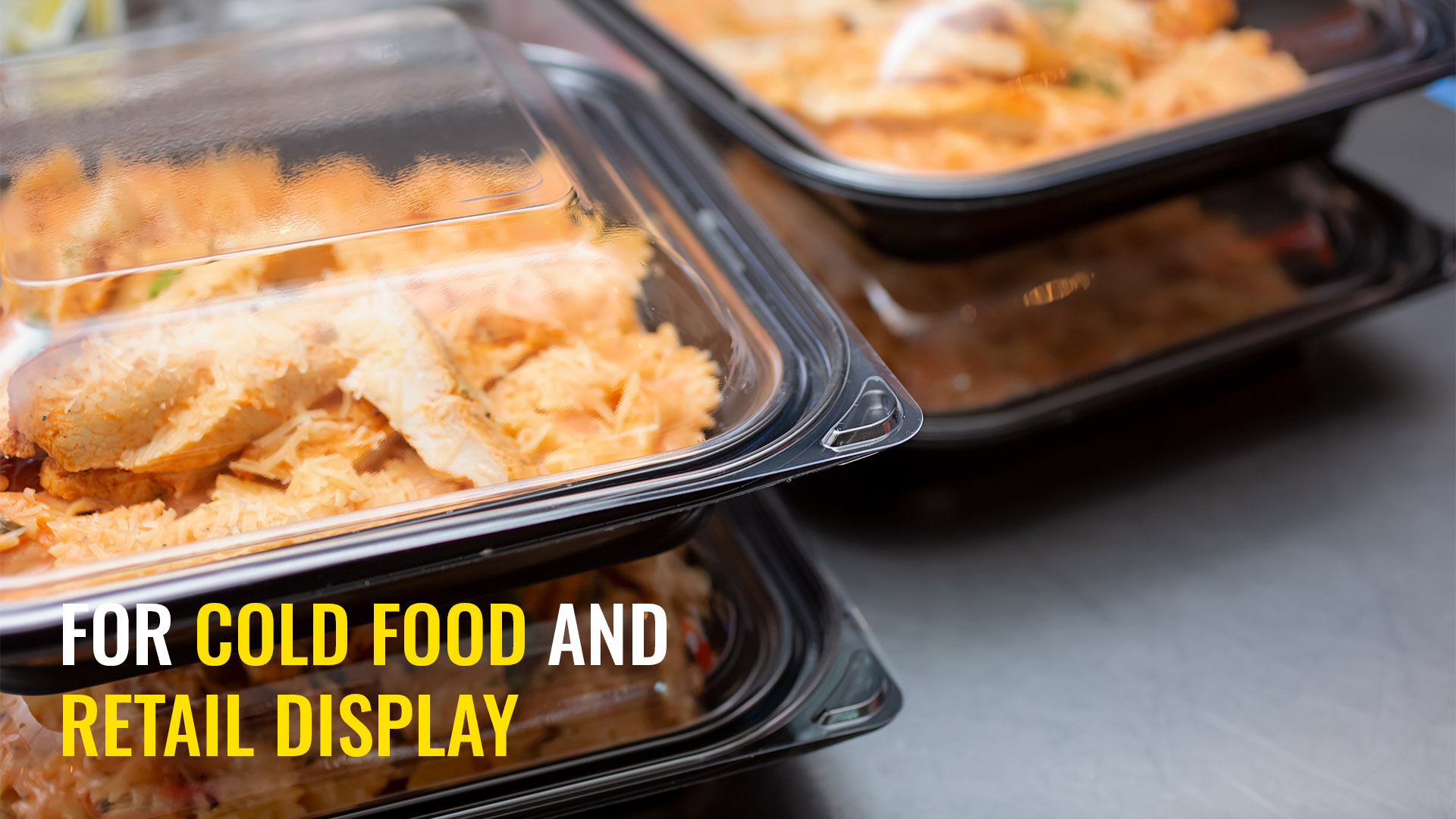
Cold and merchandising-focused containers are a staple in grab-and-go sections or pre-cut produce aisles. These containers are designed to stay chilled while showcasing their contents, making them perfect for refrigerated displays that catch the customer’s eye.
Oriented Polystyrene Hinged Containers (OPS)
Oriented polystyrene containers are known for their clarity and durability. Their transparent design allows customers to easily see the product, making OPS a popular choice for display-ready foods. Because OPS is stretched during manufacturing, it gains better structural strength and impact resistance compared to PS containers, which helps it hold its shape and resist cracking or bending when cold.
Examples of when OPS containers would be beneficial include: for cold foods and deli items, pre-made salads and prepared meals, grab-and-go programs, and for display-oriented packaging. An example of an OPS container would be Dart’s dome lid hinged container.
Recycling OPS is often limited. Curbside programs do not accept polystyrene food packaging. For the most accurate information on whether or not your area can recycle OPS containers, check with your local municipality or waste hauler.
Polyethylene Terephthalate Hinged Containers (PET)
Polyethylene terephthalate, or PET, is a clear, strong plastic that is popular for food packaging because it shows off the product inside while keeping it secure. In fact, PET containers are the most contact clear type of substrate, and they are also lightweight yet durable. All these qualities combined make them an ideal substrate for cold foods like salads, sandwiches, fruit cups, and desserts. The material is moisture and grease-resistant, which also helps maintain the appearance and freshness of your menu items and food stations.
Recycled PET, or rPET, uses post-consumer recycled materials to create the same clear, sturdy containers as traditional PET, but with a smaller environmental footprint. rPET is a great choice for food service operations looking to meet sustainability goals without sacrificing performance or presentation. Just like PET, rPET is perfect for cold foods such as salads, grab-and-go meals, and fresh-cut fruit, helping businesses offer a visually appealing product while being mindful of resources.
An example of a PET container would be Dart’s hinged container and rPET is Eatery Essential’s hinged container.
For recycling PET containers, clear, thermoformed PET without ink or labels is accepted for recycling throughout most of the US and Canada. However, for the most accurate information, we recommend checking with your local municipality or waste hauler to see if it is accepted in your community’s recycling program.
Compostable and Sustainability Focused Substrates
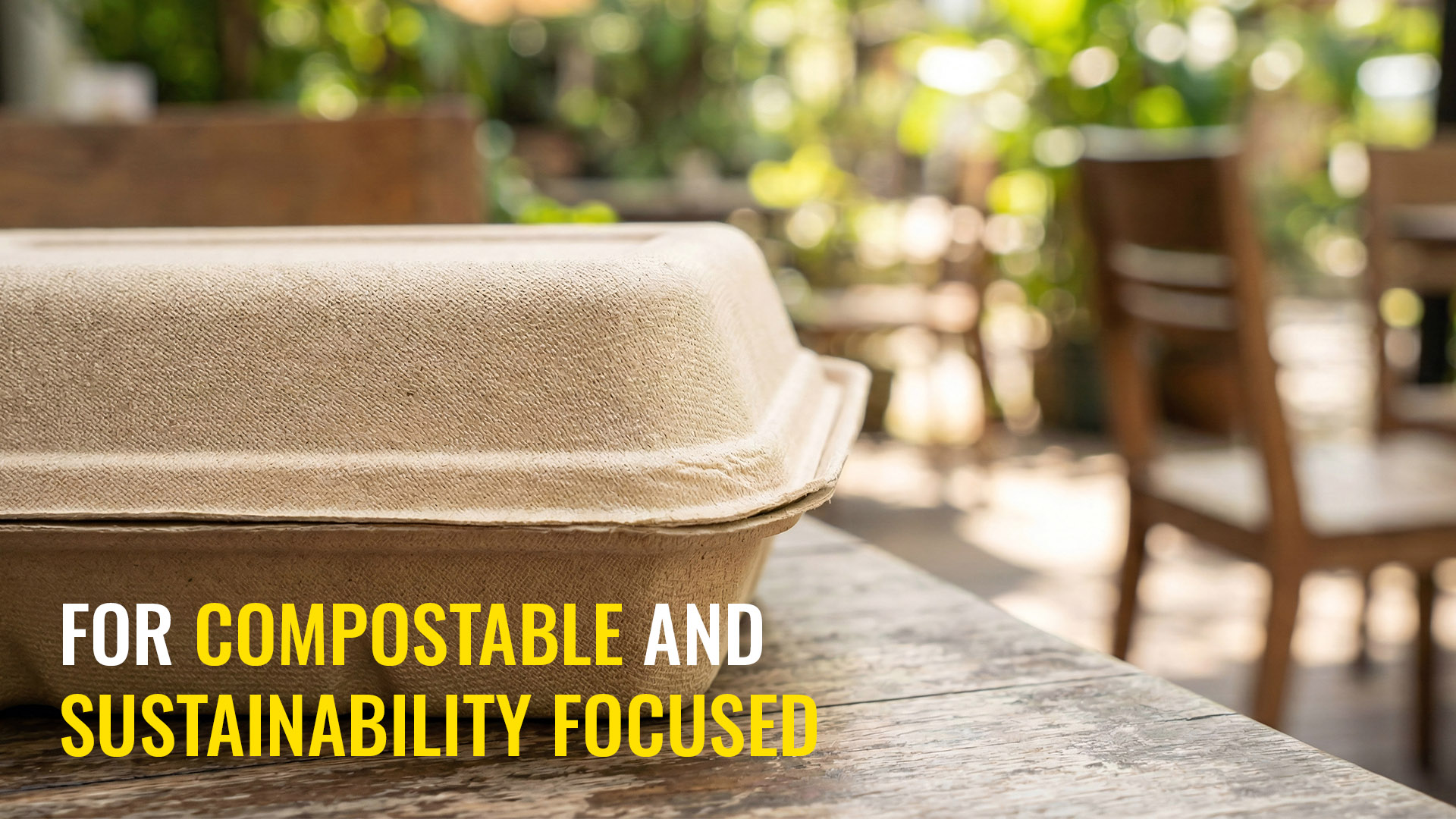
Sustainability is on everyone’s mind, and small changes can make a big impact. So, here are a couple of environmentally-friendly substrates that can reduce your business’s carbon footprint without sacrificing quality or durability.
Molded Fiber Hinged Containers (Pulp)
Molded fiber containers are made from plant-based materials such as paper, sugarcane, or other plant-based material. They provide a strong sustainability story while offering reliable performance. They are also grease resistant, PFAS-free, and microwavable.
Examples of when pulp containers would be beneficial include when businesses are looking to adopt more sustainable processes, for hot or cold foods taken to-go, and businesses wanting more eco-conscious branding. Vegware’s Nourish hinged container or Huhtamaki’s Paper Pro Natural hinged container are just some examples of pulp containers.
Plant-Based Plastic Hinged Containers
Plant-based plastic, or PLA, is a substrate derived from renewable resources. An example is the Veridian™ green hinged container from Eco Products or Vegware, which is specifically designed to meet compostability labeling requirements in states such as Washington and Colorado. These BPI-certified compostable containers are tinted green and clearly labeled to make identification easier both on the shelf and in composting streams. However, PLA containers are intended for cold food applications only and are not suitable for reheating or high-temperature use. Another thing to keep in mind, while these types of containers are compostable, PLA containers are only compostable in commercial composting facilities, and not every area has commercial composting.
Finding the Right Hinged Container
There is no single “best” hinged container substrate. Menu type, temperature requirements, sustainability goals, storage duration, and local and state regulations all play an important role in selecting the right option.
Our team at WCP can help you determine which container best fits your operation. Our local food service specialists can walk you through the range of hinged container options we offer and help answer any questions. Give us a call at (877) 398-3030 to learn more or schedule a consultation.
Sources: Created in collaboration with Dart Container and other product specialists.